

The Future of Legal Collaboration

Written by Ted Theodoropoulos (CEO, Infodash)
The recent announcements of Legora‘s Portal and Harvey‘s Shared Spaces have sparked something the legal tech market desperately needed: a real conversation about collaboration.
I’ve been at the center of the legal collaboration space since 2008 when I started the predecessor company to Infodash. These announcements hit close to home, and I wanted to share my perspective on what they mean for law firms and where this market is actually headed.
First, Let’s Be Honest: The Market Has Been Badly Neglected
The legal extranet space hasn’t seen meaningful R&D investment in years. It’s ripe for disruption, and frankly, it’s about time someone showed up besides Infodash with fresh thinking and real capital.
I attended the The LegalTech Fund Summit a few weeks ago and got asked repeatedly whether these practice-of-law portals compete with our extranet platform.
The answer is no. They’re complementary.
And I couldn’t be more excited about Harvey and Legora putting serious investment into legal collaboration. This space needs it…badly.
The Dominance of Legacy Solutions
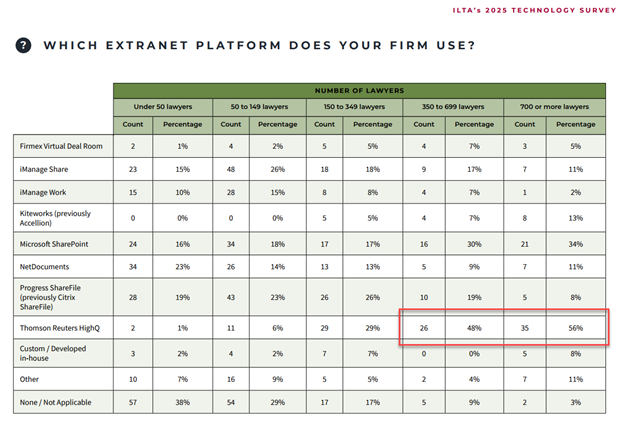
According to International Legal Technology Association (ILTA)‘s 2025 Technology Survey, HighQ continues to dominate the legal extranet space among Am Law firms. HighQ was genuinely innovative when it began accumulating market share in the early 2010s. Thomson Reuters acquired the product in 2019, and not much has changed since.
Actually, that’s not entirely true. One thing has changed: the price.
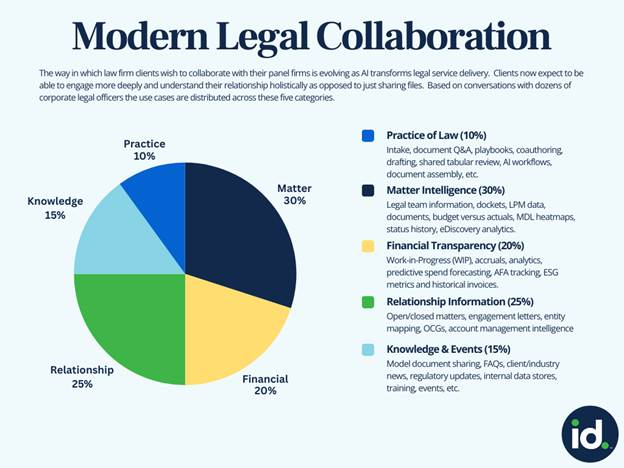
Portal and Shared Spaces are both interesting solutions. I think there’s demand for what they deliver. But here’s the thing: practice-of-law solutions represent a fairly narrow slice (see graphic further below) of what clients actually want from legal collaboration.
The questions I fielded at TLTF made me realize there’s widespread confusion about what legal collaboration is today and what it might look like tomorrow.
Current State: Islands by Design
Legacy ringfenced solutions like HighQ currently dominate the marketplace for a reason that made sense at the time. Isolation was a feature, not a bug when the cloud was scary to law firms and their clients.
The air gap between systems created a walled garden that provided the perception of safety. These systems were islands provisioned outside a law firm’s environment. The friction getting data and documents in and out was there by design.
But the world has changed, and these design decisions have become liabilities.
The Real Shortcomings
Integration and extensibility were afterthoughts in these legacy systems. It’s incredibly difficult to build robust customizations and deploy them across multiple sites. They weren’t architected for that kind of extensibility.
Then there’s what I call the “Sync Tax” – the ongoing cost paid when data must be kept synchronized across multiple platforms.
Version control nightmares arise when a lawyer edits a document in the DMS while a client simultaneously makes comments or edits on the duplicate copy in the extranet. Law firms also end up paying to store the same content in both the DMS and the extranet.
Clients need a separate login, URL, and user interface for each system which is not ideal. Law firm clients want to use their Microsoft credentials to access their data. They also want to access that data in places like their own Microsoft Teams tenant (hint: Infodash allows this😉).
Big Law is now very comfortable with the cloud. The friction of getting data in and out and deploying customizations across systems isn’t a safety feature anymore – it’s a major operational liability.
The AI Transformation Wave
Practice-of-law solutions are genuinely transforming how legal work gets delivered. They have backing from the biggest and best funds in Silicon Valley like:
- Andreessen Horowitz (a16z)
- Sequoia Capital
- Kleiner Perkins
- Bessemer Venture Partners
- GV (Google Ventures)
- OpenAI
When you have funds like this writing checks for companies to build out legal collaboration systems it’s an incredibly strong signal that things are about to change. When have we ever seen this level of interest in legal tech from Silicon Valley?
FWIW, I’ve seen both Harvey and Legora in action. I was impressed each time. I think both companies have very bright futures.
There’s been talk about the valuations of both companies and their dependence on revenue stability. Harvey published a report in partnership with Reena SenGupta showing impressive usage numbers, which is a good early signal. But both platforms need to find ways to get sticky.
This creates tension between their need for a moat and firms’ need to stay agile.
Client-facing solutions are one way to make products sticky. If clients get accustomed to leveraging the platform directly, it becomes much harder to take that away down the road.
I expect Harvey and Legora to continue bundling features to increase stickiness. I wouldn’t be surprised at all to see one or both bundle a native DMS. Practice-of-law solutions need to access and store documents as part of what they do, and the document management needs of law firms are well documented.
Conversely, I think we’ll see iManage and NetDocuments continue investing heavily in building AI solutions.
But here’s what should be keeping law firm leaders up at night: operational risks of getting deeply entrenched when there’s still lots of dust left to settle. We don’t know if the long-term winners of this market even exist yet.
The Narrow Slice Problem
Practice-of-law solutions aren’t designed for clients to manage their relationship with the firm. They enable specific use cases where clients can run workflows the law firm creates, analyze documents using the firm’s proprietary playbooks, or create chronologies from client documents.
These capabilities are useful. But they represent a very narrow slice of legal collaboration use cases.
Future State: What Clients Actually Want
Client needs and expectations are shifting dramatically as the legal market transitions to a tech-enabled service delivery model. As alternative fee structures become more prevalent and the billable hour loses ground, clients will need to engage differently.
Clients will want to see:
- Listings of open and closed matters and associated spend
- When matters exceed budget or scope
- Trends in their legal spend over time
- How the firm is delivering cost savings using AI
- What attorneys are working on their matters and their backgrounds
- What new regulatory updates impact their business
- Win/success rates for litigation matters
- Legal project management status
- Estimates of their eDiscovery spend
- Docketing information
- Open tasks for which they’re responsible
Practice-of-law solutions weren’t designed to provide this information. They’re laser-focused on the delivery of work product, which is important but incomplete.
The answers to these questions reside in multiple data sources that require a robust integration layer to pull information across disparate repositories and systems. Modern legal collaboration platforms need to be deployed in the law firm’s tenant so they can tap into these data sources directly.
Ryan McDonough gives us a preview of the future in his article discussing how AI-native firms will deploy an API ecosystem through which they’ll engage with clients. This is the direction of travel, and it’s coming faster than most firms realize.
Customers want fewer systems to log into, not more. They want to understand and manage their relationship with their panel firms, not just collaborate on work product.
Why I’m Excited About “Competition”
So why am I excited to see Harvey and Legora making headlines about their collaboration tools? Isn’t this competition?
No. It’s opportunity.
It’s the opportunity to bring much-needed focus to the marketplace and signal that innovation is not just welcome but necessary. We have the biggest VC funds in Silicon Valley writing checks to disrupt how law firms engage with their clients. That should signal to everyone that the old, tired way isn’t going to work going forward.
Harvey and Legora aren’t going to change the interoperability between law firms and clients on their own, nor should they. The capabilities they’re bringing to market are necessary pieces of a much bigger picture.
I think we’ll likely end up partnering with both companies so firms can deliver an experience that encompasses the entire client relationship. The future isn’t about competition for a narrow wedge of functionality – it’s about integration across the full spectrum of what clients need.
The Next Chapter
The legal collaboration market is finally getting the attention and investment it deserves. Practice-of-law solutions are critical components, but they’re not the complete answer to what clients are asking for.
The winners in this space will be those who understand that legal collaboration isn’t just about delivering work product. It’s about creating seamless, integrated experiences that give clients real-time visibility into their matters, their spend, and the value they’re receiving.
The dust is still settling. The technology is still evolving. But the direction is clear: clients want consolidation, not proliferation. They want insight, not just access. They want partnership, not just portals.
I think highly of Max Junestrand and Winston Weinberg and wish them both tremendous success. The rising tide lifts all boats, and right now, this market needs a rising tide.
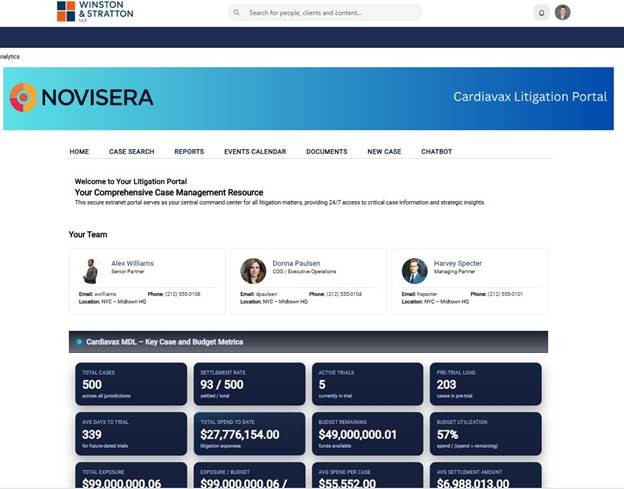
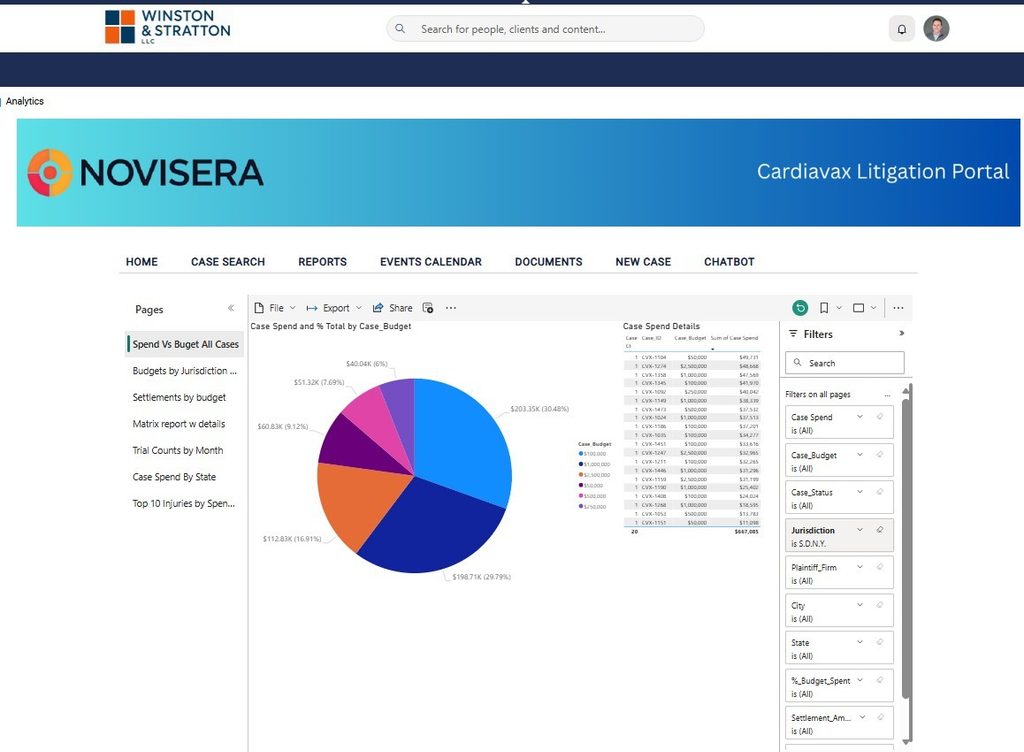
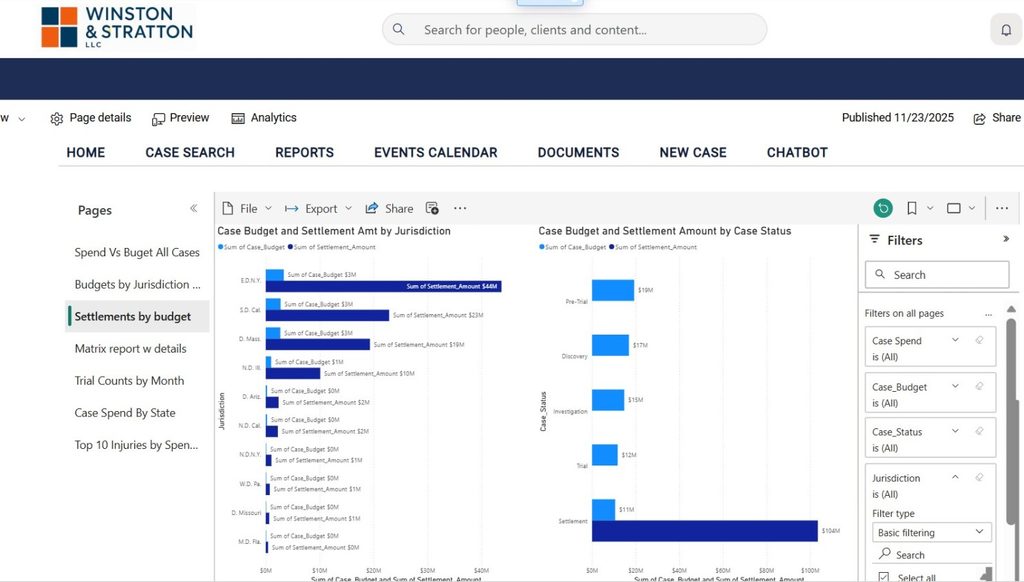
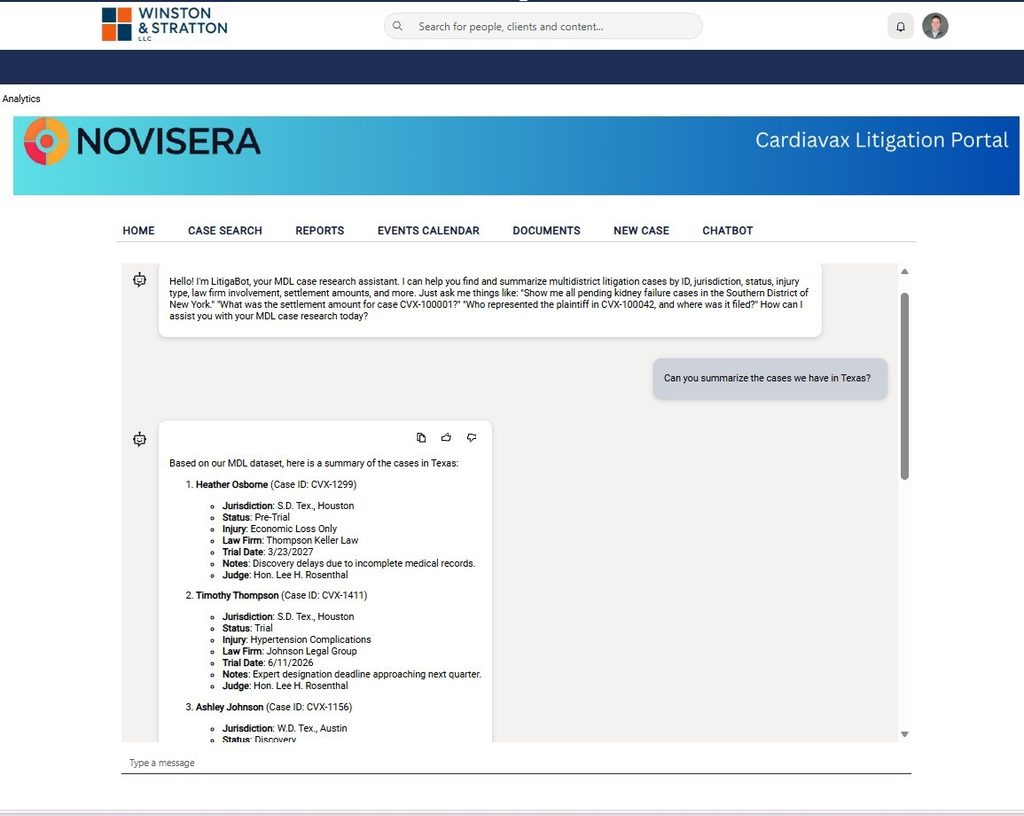
If you want to learn more about how Infodash is tackling modern legal collaboration holistically, please reach out! I’ve included some screenshots below in case you want a sneak peek

Subscribe for Updates